
Advantages of the Dental CBCT Scan: A Game-Changer in Oral Health
December 5, 2024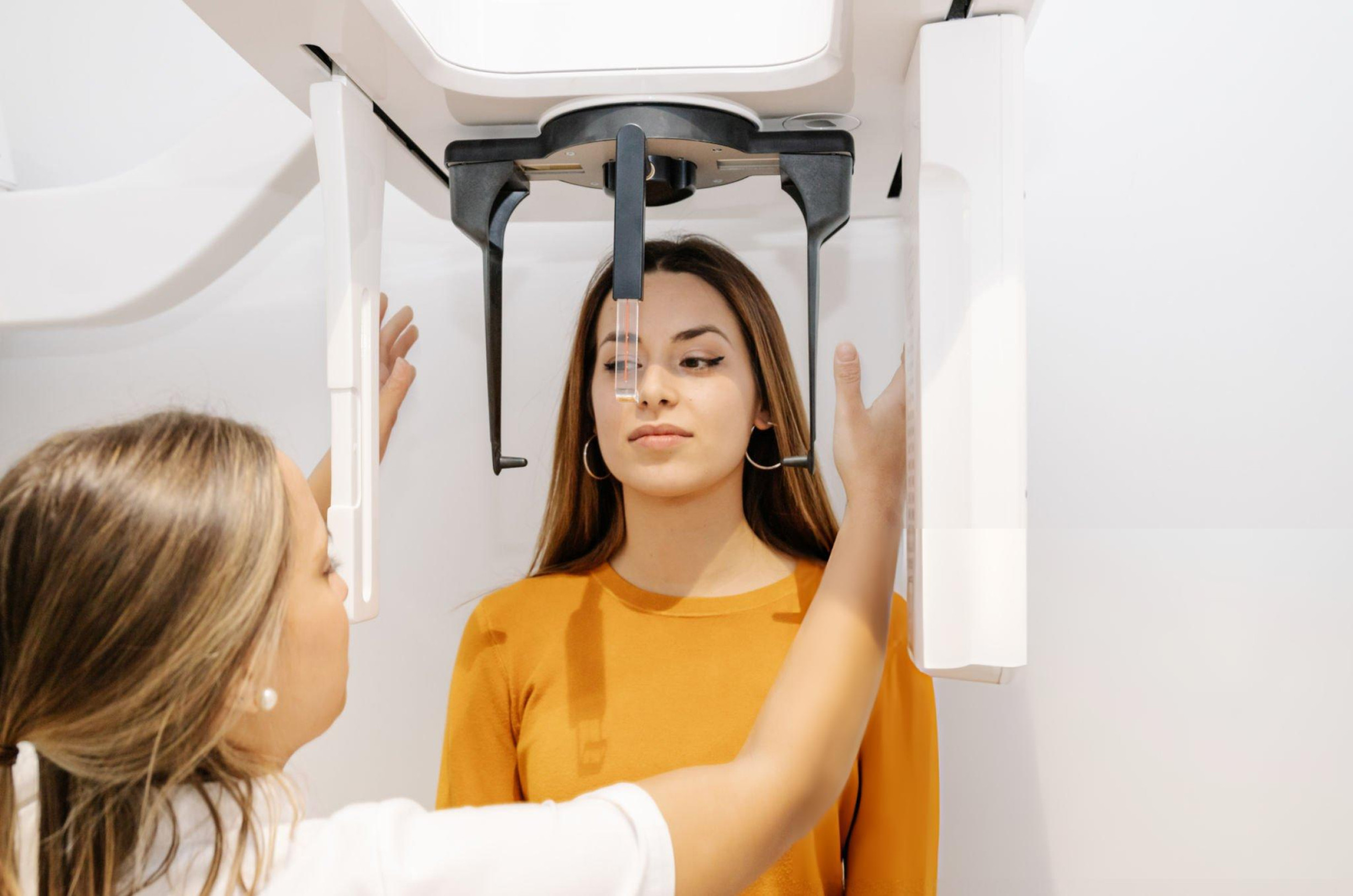
Imagine trying to solve a puzzle with missing pieces — you can see parts of the picture, but critical details are absent, making it nearly impossible to fully understand what you’re looking at.
That’s what traditional X-rays can feel like. They provide a snapshot, but they often miss the finer details needed to see the whole picture. Without those missing pieces, diagnosing complex conditions or pinpointing issues can be a challenge, leaving room for uncertainty or error.
Enter Cone Beam Computed Tomography (CBCT). Unlike traditional X-rays, which offer a flat, two-dimensional view, CBCT provides a detailed 3D map of teeth, bones, and soft tissues.
This technology, like other modern digital dentistry, redefines dental care by enabling accurate diagnosis, precise treatment planning, and better patient outcomes. From detecting hidden issues to guiding advanced procedures, CBCT has become an indispensable tool for dental professionals aiming to deliver exceptional care.
At CAD-Ray, we bring years of experience in the digital dentistry space. In this blog, we’ll outline the specifics of the dental CBCT scan and why it makes sense to consider the technology for your practice.
What is a CBCT Scan?
Cone beam CT scan captures detailed 3D images of a patient’s teeth, bones, and soft tissues in a single scan. This advanced imaging method allows dental professionals to view structures from multiple angles, offering unparalleled clarity and precision.
Studies show CBCT achieves a diagnostic sensitivity of 95.1% for predicting inferior alveolar nerve exposure during lower third molar extractions, compared to lower rates with panoramic radiography. Additionally, CBCT demonstrates an 85.2% agreement rate with micro-CT evaluations in detecting root canal anatomy, underscoring its precision in identifying complex dental structures.
The process works by rotating a cone-shaped X-ray beam around the patient’s head. During this rotation, the system captures hundreds of images, which are reconstructed into a comprehensive 3D model. This model accurately visualizes the patient’s oral anatomy, including hard-to-see areas like nerve pathways and sinus structures.
Cone beam CT scans are particularly valuable for diagnosing complex cases and planning treatments with precision. Delivering high-resolution images helps dentists make more informed decisions, meaning better patient outcomes.
CBCT Benefits in Dentistry
Dental cone beam CT (CBCT) technology offers numerous benefits that make it an essential tool in modern dental care.
Precise Diagnostics for Complex Cases
CBCT provides detailed 3D images of the teeth, jawbone, and surrounding structures, and it’s invaluable for diagnosing complex dental issues. The technology helps identify impacted teeth, cysts, fractures, and tooth decay that traditional X-rays might miss. No detail goes unnoticed.
Improved Accuracy in Implant Placement
For dental implants, precision is critical. CBCT scans allow dentists to accurately assess bone density, nerve locations, and sinus anatomy. This information ensures implants are placed in the ideal position. This reduces risks and improves long-term success rates.
Faster Treatment Planning
A complete picture in a single scan significantly speeds up the treatment planning. Dentists can quickly evaluate a patient’s condition and develop a tailored plan, reducing the time between diagnosis and treatment.
Lower Radiation Exposure Compared to Traditional CT Scans
CBCT scans use significantly less radiation exposure than conventional CT scans, making them safer for patients. While offering high-resolution 3D imaging, CBCT minimizes exposure, balancing diagnostic quality with patient safety.
These benefits demonstrate how CBCT enhances precision, efficiency, and safety. This technology transforms dental care for professionals and patients.
Applications of CBCT
CBCT technology has a wide range of applications in dentistry, providing critical insights for various treatments and procedures.
Orthodontic Treatment Planning
For orthodontists, CBCT scans offer detailed 3D views of teeth and jaw alignment, making it easier to plan treatments like braces or aligners. These scans reveal underlying issues, such as jawbone irregularities or unerupted teeth. This leads to more precise and effective treatment strategies.
Detection of Impacted Teeth and Cysts
CBCT is particularly effective at identifying impacted teeth, cysts, and other abnormalities that may not be visible on standard X-rays. Its high-resolution imaging allows dentists to assess these issues’ size, location, and potential impact on surrounding structures. The result is timely and accurate interventions.
Guidance for Root Canal Treatments and Surgeries
In endodontics and oral surgery, CBCT dental scans provide detailed images of nerve pathways, root anatomy, sinus structures, and the nasal cavity. This information guides root canal treatments and complex surgical procedures, reducing risks and improving outcomes.
From orthodontics to oral surgery, CBCT’s versatility makes it a valuable tool for diagnosing and planning treatments with precision and confidence.
Comparison to Traditional X-rays
CBCT scans offer significant advantages over traditional 2D X-rays, transforming the way dental professionals diagnose and treat patients.
Superior Image Quality and Data
While traditional X-rays provide flat, two-dimensional images, CBCT scans deliver detailed 3-D visualizations of the teeth, jaw, and surrounding structures. This allows dentists to view complex anatomy from multiple angles, offering insights that standard X-rays cannot.
For example, CBCT reveals precise measurements of bone density, nerve pathways, and sinus positions, which are essential for advanced procedures like implant placement or surgical extractions.
The Power of 3D Visualization
The ability to see the oral anatomy in three dimensions eliminates guesswork. Dentists can identify hidden issues, such as tiny fractures or impacted teeth, with greater accuracy. This level of detail leads to more precise diagnoses and treatment plans, reducing the likelihood of complications and ensuring better outcomes.
Compared to traditional X-rays, CBCT scans provide a more comprehensive understanding of a patient’s oral health, making them an indispensable tool in modern dentistry.
Patient Benefits of a Dental CBCT Scan
CBCT scans offer patients clear advantages, improving their experience and outcomes. It results in shorter visits, clearer communication, and greater confidence in their dental care.
Reduced Chair Time
With CBCT’s precise imaging capabilities, dental professionals can capture detailed 3D images in a single scan. This efficiency reduces the need for multiple appointments or repeated X-rays, minimizing patients’ time in the chair. Faster imaging also allows for quicker diagnoses and streamlined treatment planning.
Increased Confidence in Treatment Plans
CBCT technology provides a clear, detailed view of a patient’s oral health, which dentists can use to explain conditions and proposed treatments. This transparency builds trust and helps patients feel more confident about their care, knowing their treatment is based on accurate, high-quality data.
Dental CBCT Scan: Redefining Precision
CBCT technology has revolutionized modern dentistry, offering unmatched precision, efficiency, and versatility. It provides detailed 3D imaging for enhanced diagnostic accuracy, improved treatment planning, and reduced patient chair time. These advancements streamline workflows for dental professionals and improve outcomes and patient satisfaction.
Whether used for orthodontic planning, implant placement, or root canal guidance, CBCT scans have become indispensable for confidently addressing complex dental cases. Investing in CBCT technology empowers practices to deliver exceptional care and elevate the standard of modern dentistry.
If you’re curious about more, our team at CAD-Ray is here for you. Contact us today!