
How Does an Intraoral Scanner Work?
October 31, 2025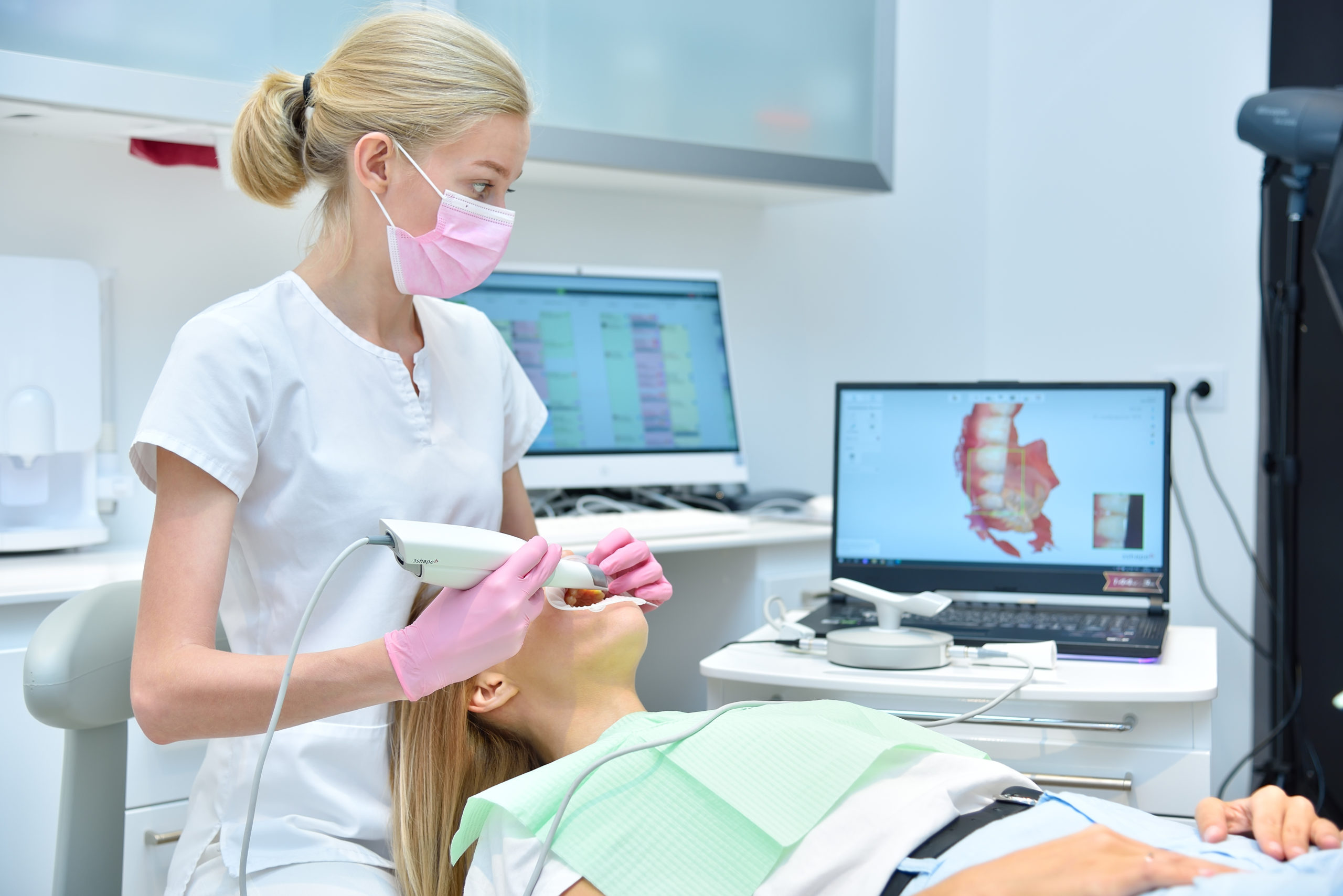
Intraoral scanners are revolutionizing how dentists diagnose, plan, and deliver care. Instead of using traditional impression trays, these digital devices create highly accurate 3D images of a patient’s teeth and gums in just seconds. No messy materials or discomfort required.
Today’s intraoral dental scanners have become essential to general and specialized dentistry. In fact, more than half of U.S. dental clinics already use intraoral scanning technology, according to the American Dental Association.
Not only do they streamline workflows, but they also minimize the need for adjustments or remakes. Advanced systems like the Trios 5 intraoral scanner are setting new standards for digital efficiency and patient satisfaction.
So, how exactly does intraoral scanning work? In this post, we’ll take a closer look at the technology behind these tools and how it’s shaping the future of dental care.
What Is an Intraoral Scanner?
An intraoral dental scanner is a handheld device that captures digital impressions of a patient’s mouth.
Using advanced optical and imaging technology, it records thousands of data points from the surface of the teeth and gums to build a detailed 3D model. This digital image replaces the traditional physical mold and serves as the foundation for treatments such as crowns, bridges, implants, and orthodontic aligners.
Because the scanning process is quick and noninvasive, these digital dentistry tools improve the experience for both patients and clinicians. Dentists can view scans in real time, make immediate adjustments, and send precise data directly to the dental lab, all within a single appointment.
How Intraoral Scanners Are Used in Dentistry
Intraoral scanners in dentistry support a wide range of restorative and cosmetic procedures.
They’re commonly used to design custom crowns and veneers, plan implant placements, create orthodontic aligners, and monitor oral health changes over time. The technology also enhances collaboration between dental practices and labs by allowing instant digital file transfers, reducing turnaround time for restorations.
Beyond efficiency, intraoral dental scanners promote accuracy. By capturing fine details that might be missed in a physical impression, dentists can achieve better-fitting restorations and more predictable outcomes.
How Does an Intraoral Scanner Work?
Understanding how an intraoral dental scanner functions helps reveal why it’s such a powerful tool in modern dentistry.
Step-by-Step Scanning Process
The intraoral scanning process begins when the dentist or technician gently moves the handheld device over the teeth and gums. As the camera and sensors collect data, specialized scanning software stitches the images together in real time, creating a precise, full-color 3D rendering on the computer screen.
The scanning workflow typically follows these steps:
- Preparation: The mouth is cleaned and dried to ensure clear image capture.
- Scanning: The intraoral dental scanner is guided over each surface, recording thousands of images per second.
- Processing: The captured data is instantly processed by the system’s software to form a complete 3D model.
- Verification: The dentist reviews the scan to check for accuracy and fills in any missing details.
- Transfer: The finalized scan is sent digitally to a dental lab or CAD/CAM system for restoration design and fabrication.
This digital workflow eliminates the waiting time, discomfort, and potential inaccuracies associated with traditional impressions.
Technology Behind 3D Scanning
Most intraoral dental scanners rely on laser or structured light technology to map the exact shape of the mouth. Laser scanners project a fine beam of light that measures distances with extreme precision, while structured light systems use patterned illumination to capture depth and surface details.
If you’ve ever wondered how a 3D laser scanner works, the principle is simple: light patterns or laser beams reflect off the surfaces of the teeth, and sensors calculate the distance and angles of those reflections. The result is a point cloud: a digital map containing millions of coordinates that form an accurate virtual model of the patient’s mouth.
Accuracy and Reliability Compared to Traditional Impressions
Digital scans are known for their precision and repeatability. Unlike physical molds that can distort due to temperature, humidity, or human error, intraoral scanners produce consistent results every time. The improved accuracy means fewer adjustments, better-fitting restorations, and higher patient satisfaction.
For dentists, this reliability translates to reduced chair time, fewer remakes, and a smoother communication process with labs. For patients, it means a faster, more comfortable visit—and a final result that fits perfectly.
Popular Intraoral Scanners on the Market
With digital dentistry growing rapidly, several manufacturers have developed scanners that combine speed, precision, and user-friendly design. Among the many options available, a few stand out for their innovation and reliability in everyday clinical use.
Trios 5 Intraoral Scanner
The Trios 5 intraoral scanner is one of the most advanced systems available today. Designed for precision and ease of use, it delivers smooth, accurate scans in less time than traditional methods. Its lightweight, ergonomic design makes it comfortable to handle, while smart motion detection ensures steady image capture without constant repositioning.
Beyond speed, the Trios 5 emphasizes hygiene and reliability. Its sealed tip design reduces the risk of cross-contamination, and automatic calibration keeps performance consistent with every scan. Together, these features allow dentists to maintain a seamless digital workflow—from scanning to design to fabrication—without interruptions or repeat impressions.
Other Notable Intraoral Dental Scanners
Several other systems also stand out in digital dentistry. Models from Medit and Shining3D are well-known for their high-resolution imaging and user-friendly interfaces. Each offers unique advantages, such as integrated cloud storage, open-file compatibility, or faster rendering speeds.
While features vary, all leading intraoral dental scanners share a common goal: to enhance accuracy, improve the patient experience, and enable more efficient communication between clinics and labs.
Benefits of Using Intraoral Scanners
Intraoral scanning delivers measurable advantages for both dental professionals and patients. Here’s a quick look at how they benefit each:
For Dentists
Digital scanning has become a cornerstone of efficient modern dental practice. With an intraoral dental scanner, dentists can complete impressions in minutes, view detailed 3D models instantly, and share data seamlessly with labs or design software. This improves case accuracy, reduces remakes, and helps maintain a steady workflow even in busy clinics.
Because scans are stored digitally, records are easy to access and compare during follow-up appointments. Many scanners also integrate with CAD/CAM systems, enabling same-day restorations that strengthen both patient trust and productivity.
For Patients
From a patient’s perspective, the shift from traditional molds to digital scanning is a major comfort upgrade. There’s no need for bulky trays or unpleasant impression materials. The process is quick, clean, and minimally invasive.
Patients also benefit from shorter appointments and fewer repeat visits. Since digital models are more precise, restorations fit better and require fewer adjustments. The real-time display allows patients to see the results on-screen, increasing engagement and understanding of their treatment plan.
Common Misconceptions About Intraoral Scanners
Despite their proven advantages, a few myths about intraoral scanners still persist. These include:
“Scanners are only for large or high-end practices.”
This misconception stems from older pricing and technology limitations. Today’s scanners, including the Trios 5, are more affordable and scalable than ever, making them accessible to both small private clinics and multi-location practices.
“Digital impressions aren’t as accurate as traditional molds.”
In reality, multiple studies have shown that digital scans are just as accurate (if not more so) than physical impressions. They capture fine details without distortion, which leads to restorations that fit more precisely and last longer.
“Learning the technology takes too long.”
Modern intraoral scanners are built with intuitive interfaces and guided workflows. With minimal training, most dental professionals can start scanning confidently within hours.
Final Thoughts
As digital dentistry continues to advance, intraoral scanners will remain at the center of efficient, patient-focused treatment. For dental clinics, adopting this technology means faster workflows, stronger patient relationships, and long-term growth opportunities.
To learn more about the Trios 5 and other cutting-edge scanning solutions, visit CAD-Ray’s product page or contact us for a consultation.